Latest News

IIT Madras Researchers Create Biosensor to Detect Pre-eclampsia Early in Pregnant Women

IIT Madras Researchers Create Biosensor to Detect Pre-eclampsia Early in Pregnant Women

Apr 30, 2025 | 682 Views

A team of researchers from IIT Madras has created a budget-friendly biosensor platform designed to test pregnant women for pre-eclampsia, a serious condition that can escalate into life-threatening eclampsia if not treated. Eclampsia, characterized by the emergence of seizures in pregnancy, presents grave dangers for both mother and child. This newly developed diagnostic device allows for rapid and cost-effective testing at the site, which is essential for timely diagnosis and early intervention, especially in low-resource environments. Project scientists state that the same technology could potentially be modified to identify other diseases, including cancer and Alzheimer’s, in the future. This innovation represents a major step forward for maternal healthcare and the availability of diagnostics, in India and elsewhere.future. This innovation represents a major step forward for maternal healthcare and the availability of diagnostics, in India and elsewhere.

GenomeIndia: Unlocking India's Genetic Future

GenomeIndia: Unlocking India's Genetic Future

Apr 29, 2025 | 796 Views

The GenomeIndia initiative has advanced considerably in the decoding of genetic data that is distinctive to the Indian populace, offering great promise for medical research and healthcare. The initiative conducted genotyping on 10,074 unrelated and healthy individuals from 85 groups—32 tribal and 53 non-tribal—throughout India. Whole genome sequencing was conducted on 9,772 individuals from approximately 20,000 collected blood samples, uncovering more than 180 million genetic variants. Out of these, there were 130 million on autosomes (non-sex chromosomes) and 50 million on sex chromosomes. Some variants are associated with disease, while others are rare or found only in India or certain communities. It is anticipated that these insights will influence future strategies for early diabetes prevention, rare disease management, drug discovery, and AI-driven precision medicine tailored to India’s genetically diverse population.

How Effective Is Okita Nail Fungus Light for Persistent Nail Infections?

How Effective Is Okita Nail Fungus Light for Persistent Nail Infections?

Apr 27, 2025 | 765 Views

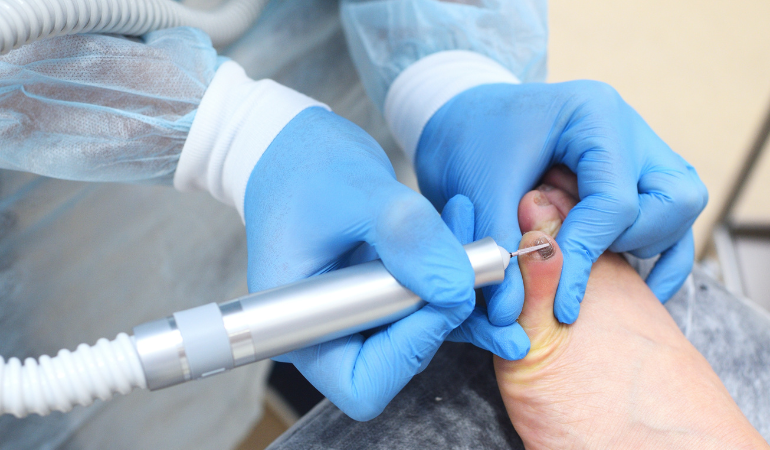
The Okita Nail Fungus Light offers a contemporary, medication-free approach to persistent nail fungus. It employs Low-Level Laser Therapy (LLLT) to address fungal infections directly at their source, reaching deep into the nail bed where the fungus flourishes. This device fosters natural healing and healthier nails in the long term, unlike creams or oral medications that can cause side effects or provide only temporary relief. Using it regularly, two to three times a day for seven to ten minutes, can result in noticeable improvements within a few weeks. A number of users have noted that their nails are cleaner and smoother, with less discoloration and brittleness. Due to its uncomplicated design and gentle technology, it is a practical and low-cost choice for those looking for a quick and effective at-home solution for nail fungus.

Do protein shakes really stay in the body for three years? Here’s busting a myth

Do protein shakes really stay in the body for three years? Here’s busting a myth

Apr 16, 2025 | 1033 Views

Recently, I came across an old videograb of actor Ayushman Khurrana telling his interviewer that protein shakes take three years to digest. For some reason, it went viral again. Let’s take a scientific dive into the importance of protein, the role of whey, and why this claim doesn’t hold up. Our body requires 20 amino acids to function optimally. Nine of these are ‘essential’ amino acids that must be obtained from food since our body cannot make them. When our body has access to the essential ones, it can produce the remaining 11, known as ‘non-essential’ amino acids. Our minimum daily protein requirement is 0.8-1 g/kg of body weight. However, optimal levels start from 1.2 g/kg of body weight. Historically, our diets were rich in unrefined and local protein sources. With refined and fast foods, our diets are rich in carbohydrates and fats, leading to protein deficiency. A 2020 study by the Observer Research Foundation identified a concerning decline in per capita protein consumption of four per cent in urban and 11 per cent in rural India. According to the Protein Consumption in Diet of Adult Indians (PRODIGY) survey, around 91 per cent of vegetarians and 85 per cent of non-vegetarian Indians fail to consume sufficient protein daily in their diets.

Hope for brain stroke patients: How a stent can clear blood clots in 24 hours

Hope for brain stroke patients: How a stent can clear blood clots in 24 hours

Apr 12, 2025 | 1117 Views

For sometime now, brain stroke patients in the West could avert brain damage as neurosurgeons used a sophisticated retriever stent to clear the blood clot from blocked arteries and restore blood flow within 24 hours. However, this device is out of reach for most Indians despite brain strokes increasing among them. That’s all set to change with the All India Institute of Medical Sciences (AIIMS), Delhi, now conducting a trial with an upgraded device that’s equipped to remove all kinds of blood clots, is better at opening blocked arteries and may cost one-fourth the original price.1 The clinical trial, GRASSROOT (Gravity Stent-Retriever System for Reperfusion of Large Vessel Occlusion Stroke Trial), is looking at the effectiveness and accessibility of a new generation of advanced stent-retriever devices that can be used in mechanical thrombectomy, a minimally invasive stroke surgery to clear artery blockage in the brain. According to Dr Shailesh Gaikwad, professor and head, Department of Neuroimaging and Interventional Neuroradiology, Neurosciences Centre, AIIMS, and one of the investigators of the trial, “We are finding out how the device works on the Indian population. The new stent-retriever has been designed specifically to tackle the unique features of a stroke clot in the Indian population, given that our arteries are narrower.” The new device was first used on August 25. The patient is doing well.